

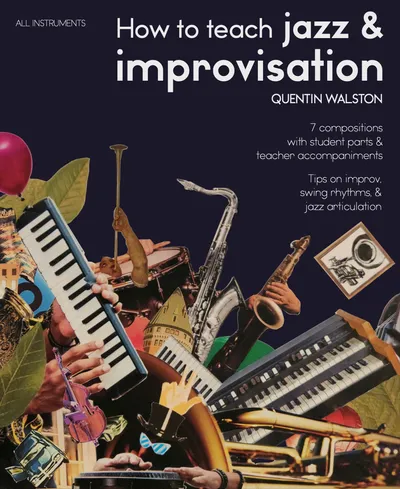
How To Teach Jazz & Improvisation – Book
Original price was: $39.95.$35.95Current price is: $35.95.
Description
“This book is an incredible resource that music teachers must have in their teaching libraries!” – Robert Fischer, piano/voice/French horn teacher
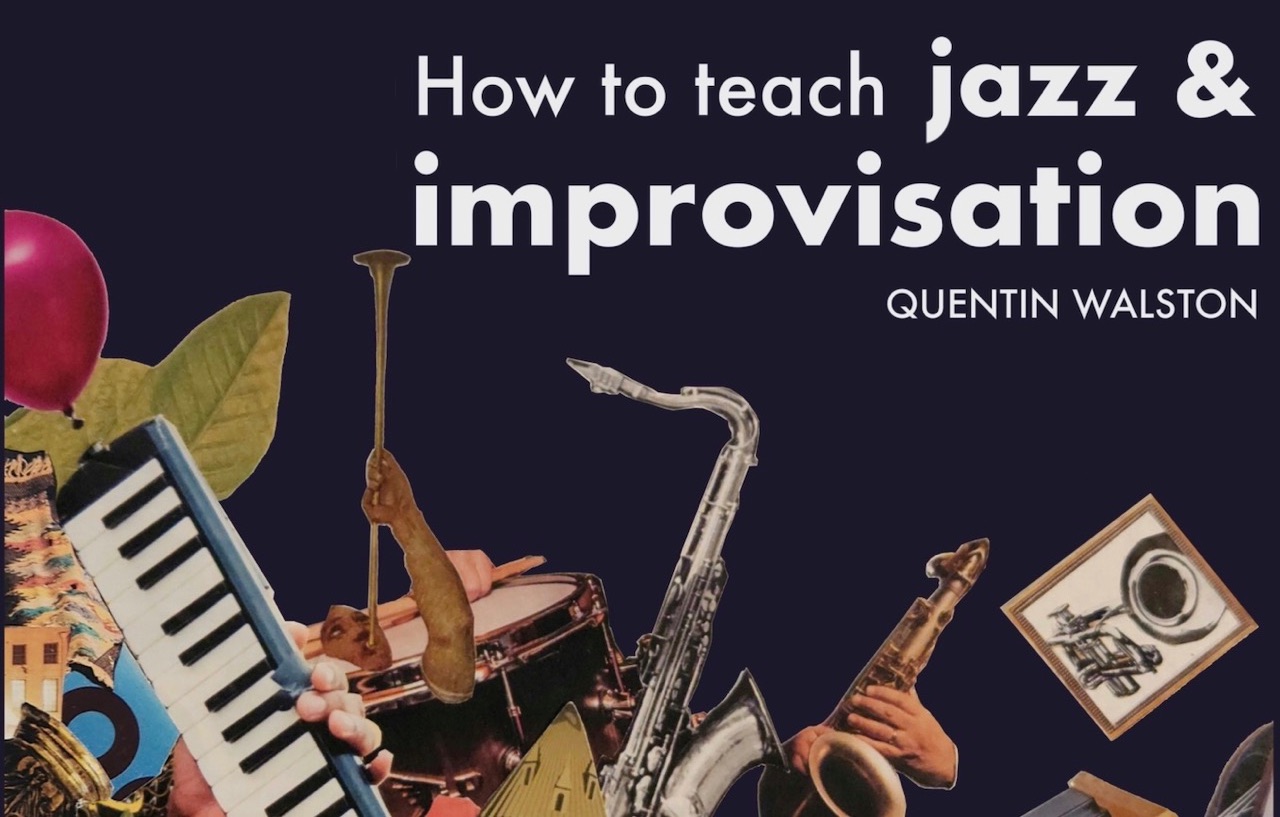
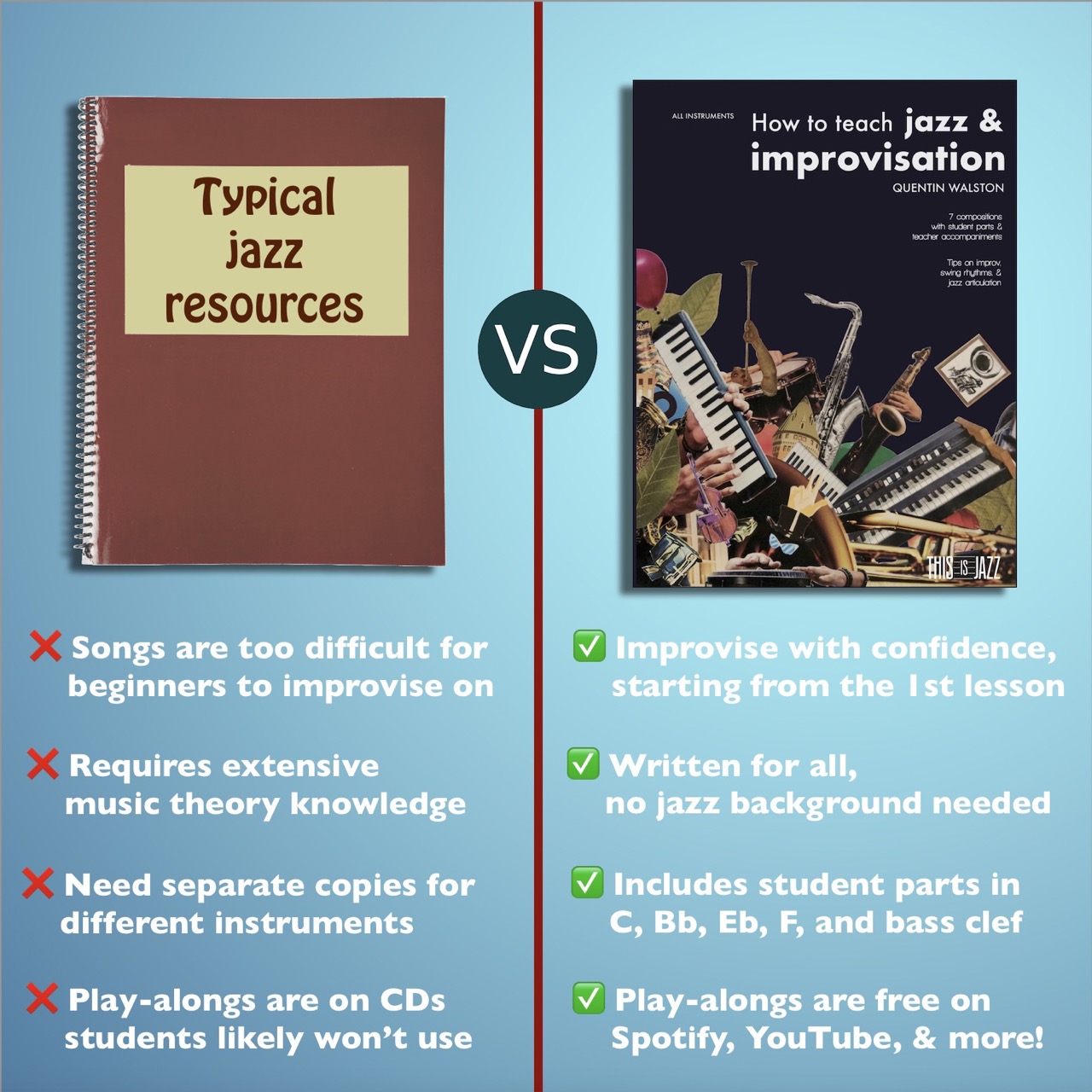
How To Teach Jazz & Improvisation is your full jazz education guide. Whether you’re an experienced educator or just starting out, this book provides valuable insights, repertoire, and tips to help you effectively teach jazz and inspire your students.
Real Jazz from Day One
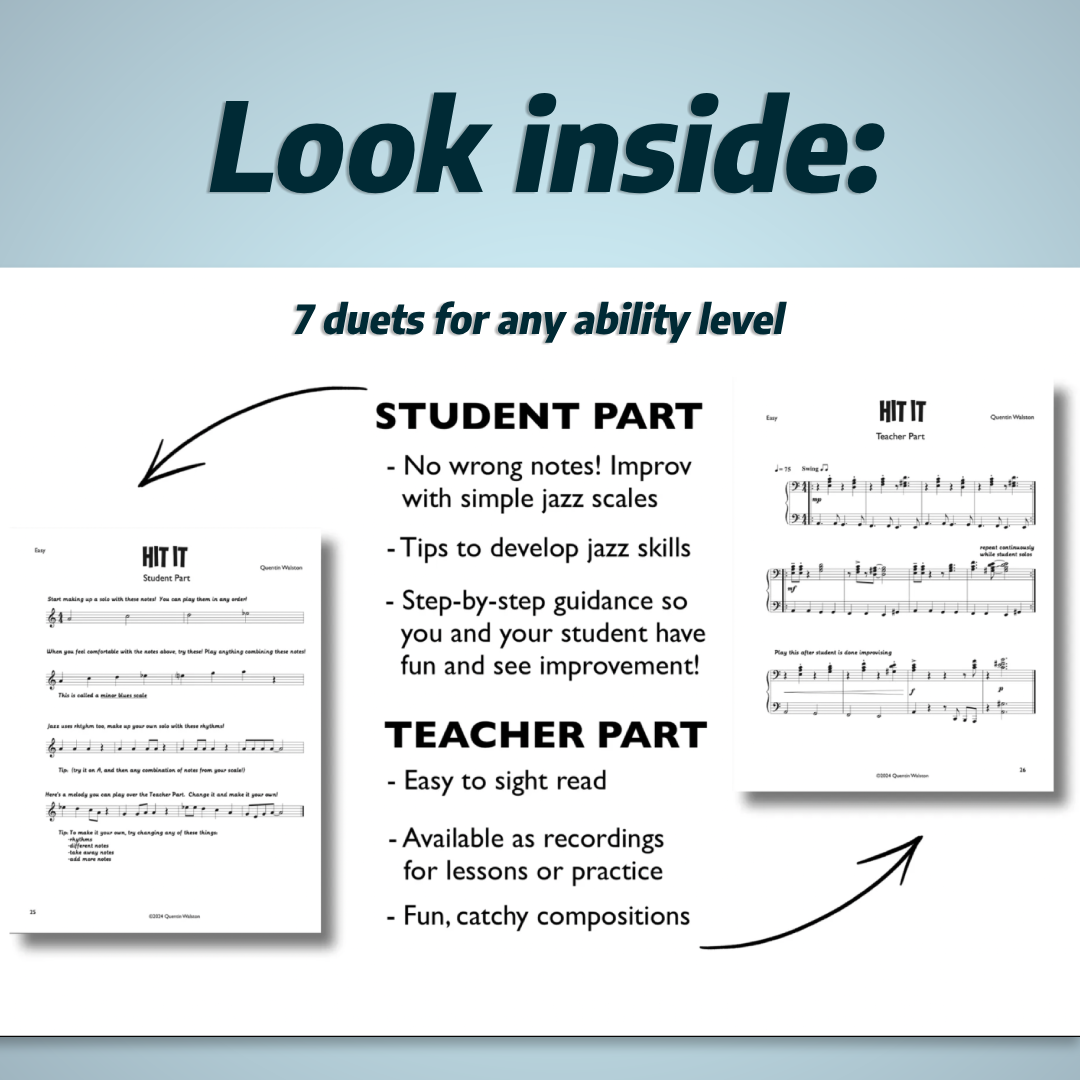
Your students don’t need years of theory to play authentic jazz. With our duet approach, you provide the jazz foundation while students immediately start improvising and creating music.
The Teacher Part: You play beautiful, written-out chord progressions that capture the true jazz aesthetic. No complex theory required – just read and play these carefully crafted harmonic foundations that sound fun and authentic.
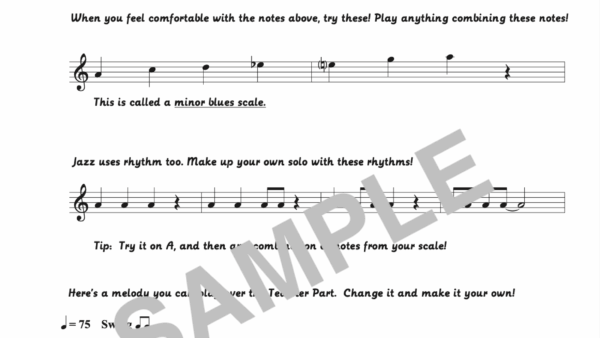
The Student Part: Students of any instrument receive suggested notes and step-by-step guidance for improvising over your chord progressions. They’re not playing exercises – they’re creating real jazz music from their very first lesson.
Result: Students hear themselves making real music immediately, building confidence and excitement for jazz. Teachers provide an authentic jazz experience without needing advanced jazz training themselves. Perfect for any instrument, any skill level, any classroom.
No Wrong Notes!
Step-by-step guidance gives students the confidence to create their own jazz solos without the fear of playing a wrong note!
- Improv techniques accessible for all levels
- Tips for advancement on each song
- Have fun and learn at your own pace!
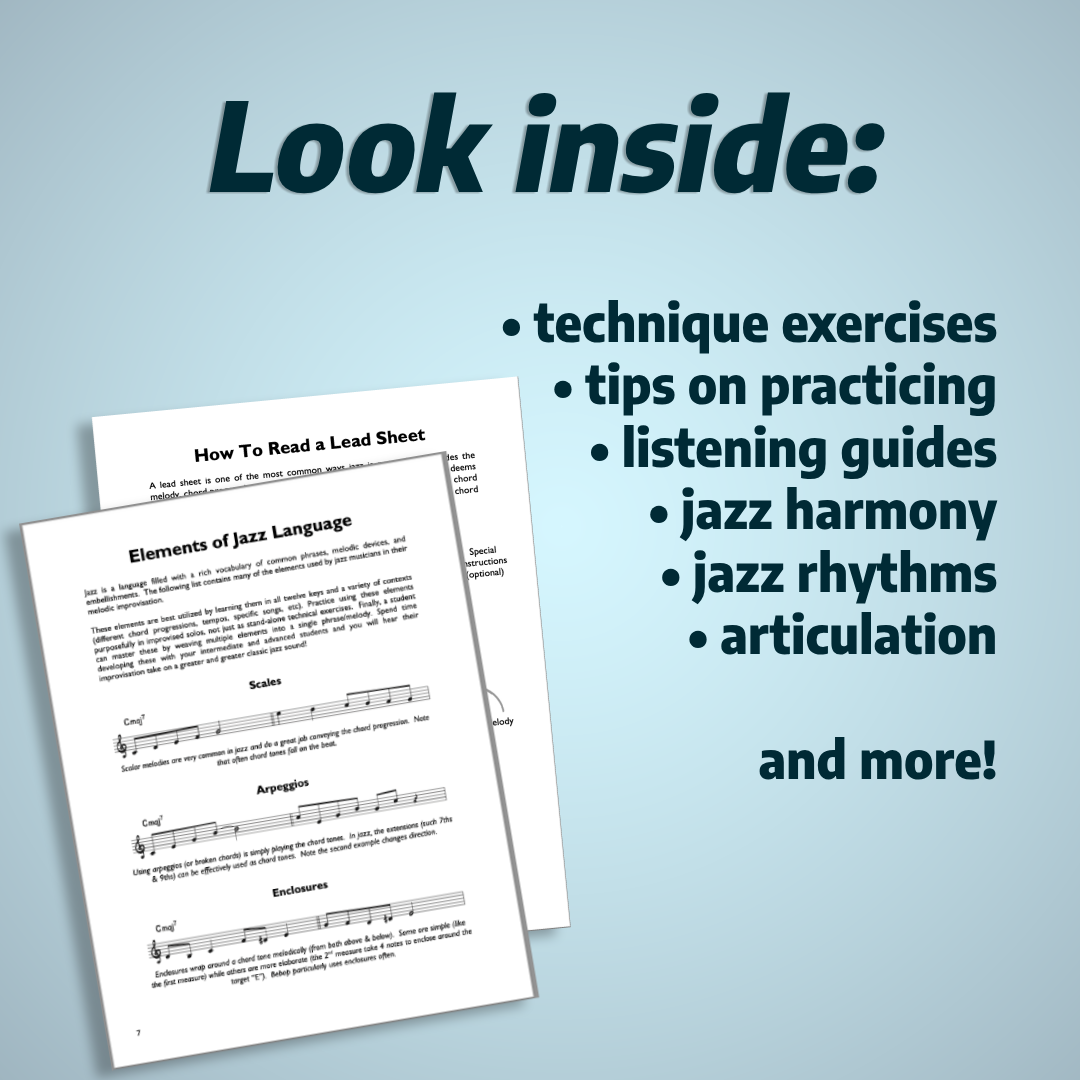
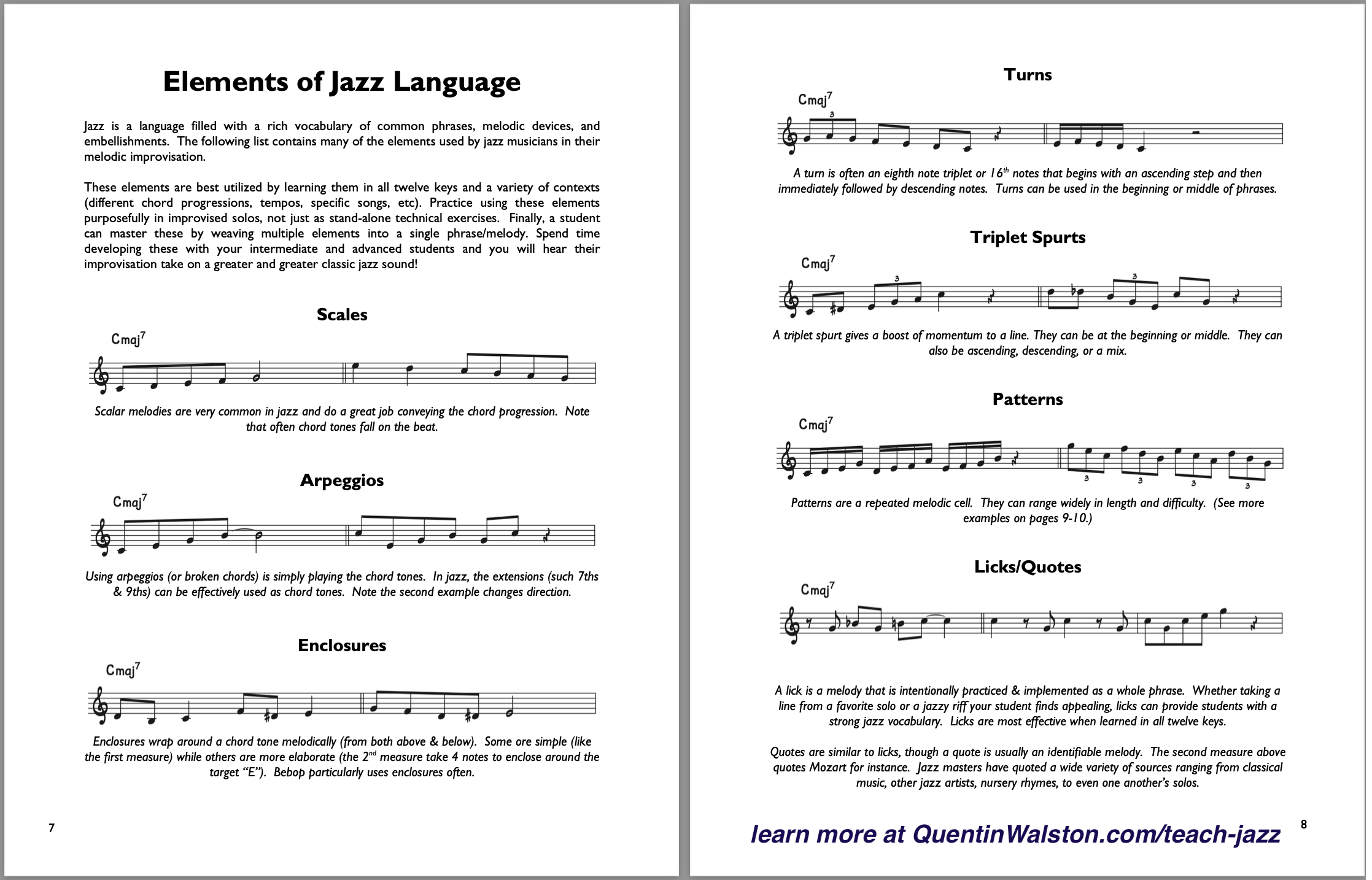
Everything You Need to Know About Jazz
In addition to the 7 pieces, the book includes comprehensive yet easy-to-understand knowledge of:
- Jazz rhythm
- Jazz harmony
- Technique
- Improv games
- Practice tips
- Recommended albums
- more!
Play-Alongs
Free and easy to access – Each of the 7 compositions has play-alongs to use in practice or lessons. Students can play along with the teacher’s duet part, honing their improvisation skills; or listen to the alternate version featuring a sample solo that uses the exact improv parameters given to the student! Access solos at This Is Jazz, or find them on Spotify, Apple Music, YouTube, and more (no more CDs or download codes!)
About the Author
 Quentin Walston is a professional jazz pianist & educator with over a decade of experience. Recognized by numerous State arts councils for his high-quality education, he gives jazz workshops to schools, teacher associations, and arts communities. His music has been heard on NPR, PBS, podcasts, and radio. He reaches millions globally on social media for his jazz content.
Start Teaching Jazz with Confidence – Get Your Copy Today!
10 reviews for How To Teach Jazz & Improvisation – Book
You may also like…
Related products
-
-
Sale!
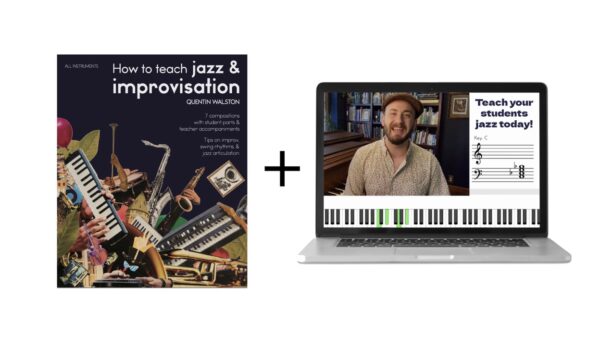
How To Teach Jazz & Improvisation – Course
Original price was: $300.00.$249.00Current price is: $249.00. -
-
Tara Planeta (verified owner) –
This is an amazing book you have put together, and I love the way you so patiently break down all of these jazz concepts. This is all information that can seem intimidating to musicians/teachers who don’t perform jazz, and definitely for students who are interested to learn but are starting from scratch. The combination of both the aural side of listening to learn/understand and supplemental explanations that fill in the blanks and questions everyone would have is wonderful.
-Tara Planeta, Ed. D. violin teacher
Matt Ogden (verified owner) –
Quentin Walston’s book on how to teach jazz and improvisation is essential study material for any student and teacher of music, regardless of genre. As opposed to common misperceptions, spontaneous creativity in music is not random, but rather Quentin’s approach shows that it can be simultaneously both rigorous and free. The successful improviser understands that there is an internal logic, a grammar if you will, to the musical language, and also a richly accumulated vocabulary of expression which has been handed down across generations. By having command over these elements at one’s fingertips, musical thoughts can be translated into sound instantaneously, as fluidly as thoughts are put into words by one who is fluent in any spoken language. Quentin’s approach shows that jazz improvisation can be understood as a subset of musical improvisation in general, and emphasizes the importance of understanding music as a language — one which has many and vastly varying idioms, dialects, and modalities — but regardless of the idiom the student should feel fluent and free to express thoughts as they come to mind, as in a conversation, and to create music spontaneously beyond the notes that are statically written on the page.
In this book, Quentin focuses on the ability of jazz musicians to speak the language of music in a fluent and spontaneous way. In my opinion, this is important for even non-jazz musicians to internalize. In the same way improvisation and spontaneous composition is alive and well among jazz musicians, those who specialize in so-called classical music could also well afford to rediscover their roots in improvisation and active musical creativity. As opposed to the strict separation we perceive today between composer and performer, in its original form, so-called classical music blurred the line between those roles much more than we do presently. One needs only study the art of free variation and embellishment in baroque music, recall the stories of J.S. Bach improvising multi-voiced fugues at the court of Frederick the Great, or explore the school of musical pedagogy taught in the 17th and 18th centuries in the Italian conservatories which trained students from a young age in the art of partimento (polyphonic melodic improvisation over a given bass, and ultimately the free improvisation of fugues and other large forms based off a given theme), to understand that even the most developed forms of musical composition must go hand-in-hand with a free and fluent ability to improvise and express complex musical thoughts spontaneously and in the moment. Outside of jazz, this art form is still seen today in the ability of highly-skilled church organists to employ varied harmonization and extended improvisation in their service playing, another case in which improvisation must be structured as well as free.
It is my hope that these contributions by Quentin Walston, among the many other educators and researchers active in this field, can help spark a renaissance in the approach to musical education which goes beyond rote performance and rules, and rather inspires the musicians of the future to understand music as a living, breathing language, in which even the great compositions of the past are understood as products of an improvisatory spirit and are performed as such, allowing all students to unlock their full creative potential and inspiring teachers in all musical genres to carry that fluency of expression and rigorous-yet-spontaneous creativity into the full scope of their pedagogical approach.
-Matthew Ogden Bassoon teacher & Associate Director of Music at Holy Trinity Catholic Church
Robert Fischer (verified owner) –
Thanks to the way this book is laid out and organized, my students can methodically go through the book one concept at a time. The layout of each section allows for an easy way to divide concepts/songs over the course of regular lessons, along with opportunities to explore and reinforce jazz/improvisational concepts practically, first in isolation as an exercise and then in practical application in song. Plenty of other jazz methods and books either lightly graze the surface of some of these concepts or are too conceptual and seemingly less practical for beginners. Also, The accompaniment tracks make this an incredibly useful and fun resource for students!
Caelyn Meier –
I love my book. I use it alot when I want to do improv with my students. Even my littlest students can do the 4 note riffs and have fun
Lisa –
As a former classroom music teacher and current private lessons instructor, I especially appreciate that Quentin provides student parts for all instruments in C, Bb, Eb, F, and bass clef
Beverly Teague –
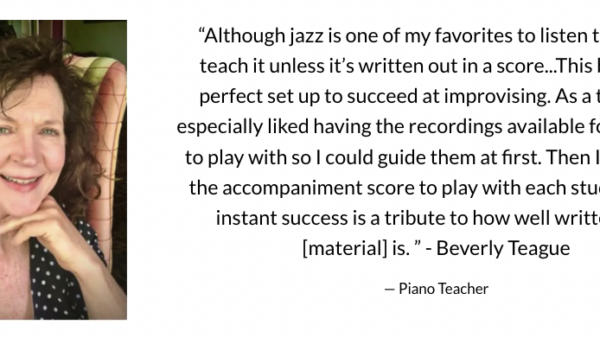
Although jazz is one of my favorites to listen to, I don’t teach it unless it’s written out in a score. I’m not a composer or improviser.
This book is fantastic because:
1.the listening is inspiring and helps the student get a feel for the sound of each piece
2. the student is given rhythms to learn and master on one note
3. the student is then given notes to improvise on while listening to the teacher part. This sets them up for success.
My students were amazed they could improvise and have a great sound when they had never done anything like this before.
This book is a perfect set up to succeed at improvising. As a teacher I especially liked having the recordings available for students to play with so I could guide them at first. Then I could use the accompaniment score to play with each student once they got a feel for what to do and how to experiment. I like how the book is divided in sections so a teacher can easily reference any part of the book for help, suggestions, recommendations. As a piano teacher I especially liked how to use the pieces with different instruments. A teacher could put together an improv group!
I really enjoyed using the materials with my students. Some were skeptical they could improvise but once they created their first melodies successfully, immediately the smiles were huge! The instant success is a tribute to how well written this book is.
Jennifer Foxx –
As a piano teacher, I’m always on the lookout for resources that are both effective and approachable, and How to Teach Jazz & Improvisation by Quentin Walston is an absolute gem.
I appreciated how user friendly this was as I needed something that would be easy! Quentin breaks down concepts into simple, digestible steps, making the material accessible to students of all ages, levels, and instruments. Whether you’re teaching a beginning pianist or guiding an adult, the material lets everyone jump right in confidently.
One of my favorite features of this book the composition section which includes duets and play-along recordings. This has created instant enjoyment and the feeling of success! The step-by-step breakdown ensures that even complex jazz concepts feel approachable.
The book offers guides and creative prompts that encourages exploration. (No fear of “wrong notes”) These tools are perfect for boosting improvisational creativity, especially for students just starting out.
How to Teach Jazz & Improvisation is clear, supportive, and musically enriching. Its’ a great resources for teachers aiming to inspire musical growth and spontaneity with their students. Highly recommend for both teachers and students interested in trying out jazz & improvisation!
highlights:
How to Teach Jazz & Improvisation by Quentin Walston is an absolute gem. The step-by-step breakdown ensures that even complex jazz concepts feel approachable. Highly recommend for both teachers and students interested in trying out jazz & improvisation!
Jacob Pembelton (verified owner) –
It’s been great to work through a method book that has such a fresh take on jazz playing and improvisation. Walston does an excellent job of breaking down large improvisational ideas into easily applicable concepts for jazz and non-jazz specific teachers alike. The book’s built in exercises and duets give students, in both one-on-one teaching as well as a group settings, immediate access to applicable situations and real life examples of how to apply the concepts. Both as a player and teacher I truly feel as though this book is worth a space on any educators shelf!
Daniel Kelly II –
Quentin Walston’s “How to Teach Jazz & Improvisation” delivers a practical, accessible approach to one of music education’s most challenging areas. Drawing from extensive teaching experience, Quentin transforms the seemingly mystical art of improvisation into teachable, structured lessons.
Quentin breaks down improvisation into digestible components, treating it as a learnable skill rather than innate talent. His step-by-step approach makes jazz accessible to intimidated students.
The book provides concrete exercises and teaching strategies that instructors can implement immediately. Particularly valuable are his techniques for creating supportive environments where students feel safe to take creative risks.
An essential resource for music educators at all levels. Quentin’s clear writing, practical exercises, and encouraging philosophy make jazz improvisation instruction more effective and accessible. The book’s emphasis on supportive learning environments and structured skill development offers valuable guidance for anyone involved in jazz education.
Particularly useful for private instructors, school music programs, and community venues offering jazz education.
John Kocur –
I had the pleasure of reading through How To Teach Jazz & Improvisation this evening. This book would be a wonderful text for a private teacher or school jazz ensemble director who would like to get started teaching jazz but is not quite sure how. The brief articles in Part I concisely summarize key points for the beginning improviser. While some sections compile common knowledge, a few present ideas in novel ways. Improvisors at any level would stretch themselves with the Isolated Practicing ideas. Young keyboardists or guitarists would save a lot of time from the Understanding Jazz Chords section which gathers pertinent advice spread throughout disparate jazz arranging and keyboard voicings. The Improv Activities sound like great fun and I can’t wait to try them with my own students. Most importantly, the Recommended Recordings lists are well-chosen and more wide-reaching than most. In particular, I love the Jazz Today list as it shows that this is a living tradition. Teachers looking to jam with students will have great fun with these Teacher parts to Quentin’s tunes. Your students will think that you have been playing jazz piano for years. Kudos to Quentin for putting together a great resource to help spread the joy of jazz.
-John Kocur
Assistant Professor of Jazz Studies, George Mason University
President, Loudoun Jazz Society