
Learning jazz piano chords can feel intimidating, especially for classically-trained musicians & educators. The good news for music educators is that jazz harmony is built on the same familiar harmony rules that govern Classical music. With some extra knowledge of what makes jazz chords unique plus these tips to get you started, you will be on to jazz piano chord mastery in no time!
What Are Jazz Piano Chords?
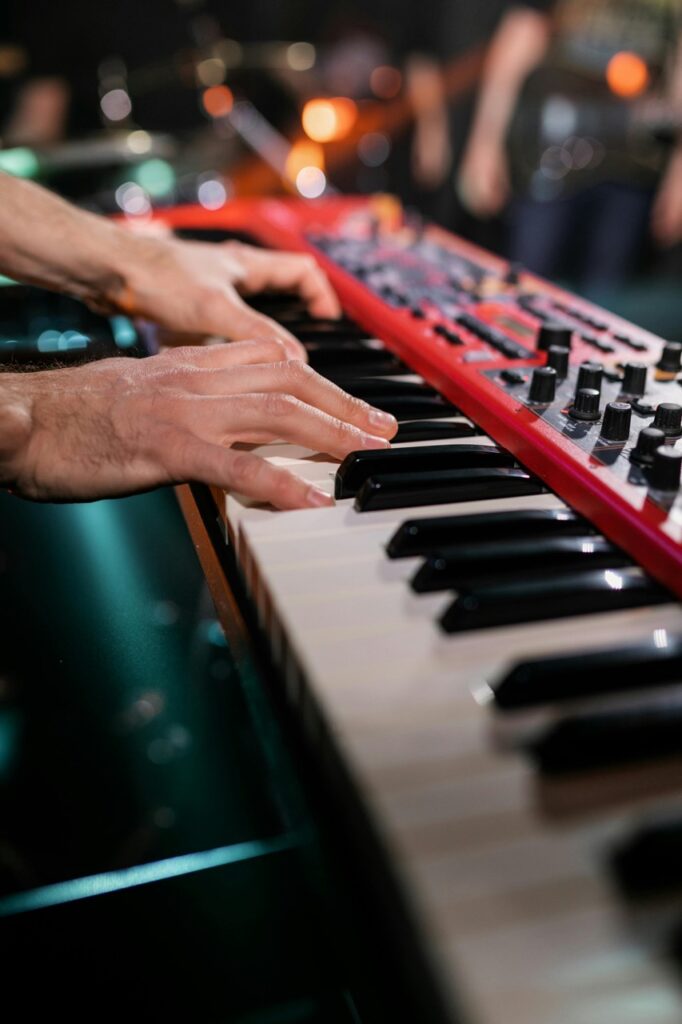
Jazz piano chords are the harmonic foundation of jazz music. Just like melody and rhythm, harmony is a fundamental element that provides the rich, sophisticated sound we associate with jazz. These chords create the basis for both composition and improvisation, often featuring lush extensions (added notes), and sometimes dense, beautiful blocks of sound.
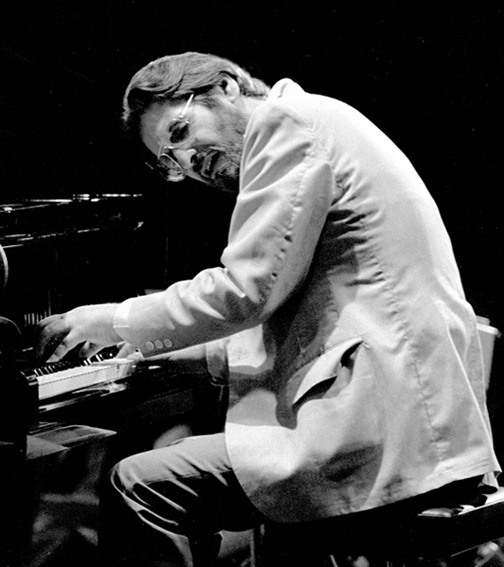
Masters like Bill Evans, Duke Ellington, Thelonious Monk, and Erroll Garner have shown us the incredible expressive potential of jazz piano harmony. Each chord has a purpose and function within the progression – concepts you’re already familiar with from your classical training.
Jazz piano chords have extensions
One of the defining features of jazz piano chords is the wide use of extensions. While jazz isn’t the first genre to use chord extensions (composers like Chopin and Debussy widely used added tones on standard triads), jazz has developed a comprehensive harmonic system where extensions are essential to both the sound and function of each chord.
A chord extension is an added a tone beyond the root, third, or fifth. The seventh is the most common extension, also found in Classical, Baroque, rock, blues, and gospel music. Jazz takes this further by adding ninths, elevenths, and thirteenths. Western music is built on stacked thirds (sometimes called tertian harmony), which is why the order of chord tones skips numbers: root, third, fifth, seventh, ninth, eleventh, and thirteenth. These numbers represent the interval above the root: so a C major chord with a ninth includes the note D (a ninth above C).
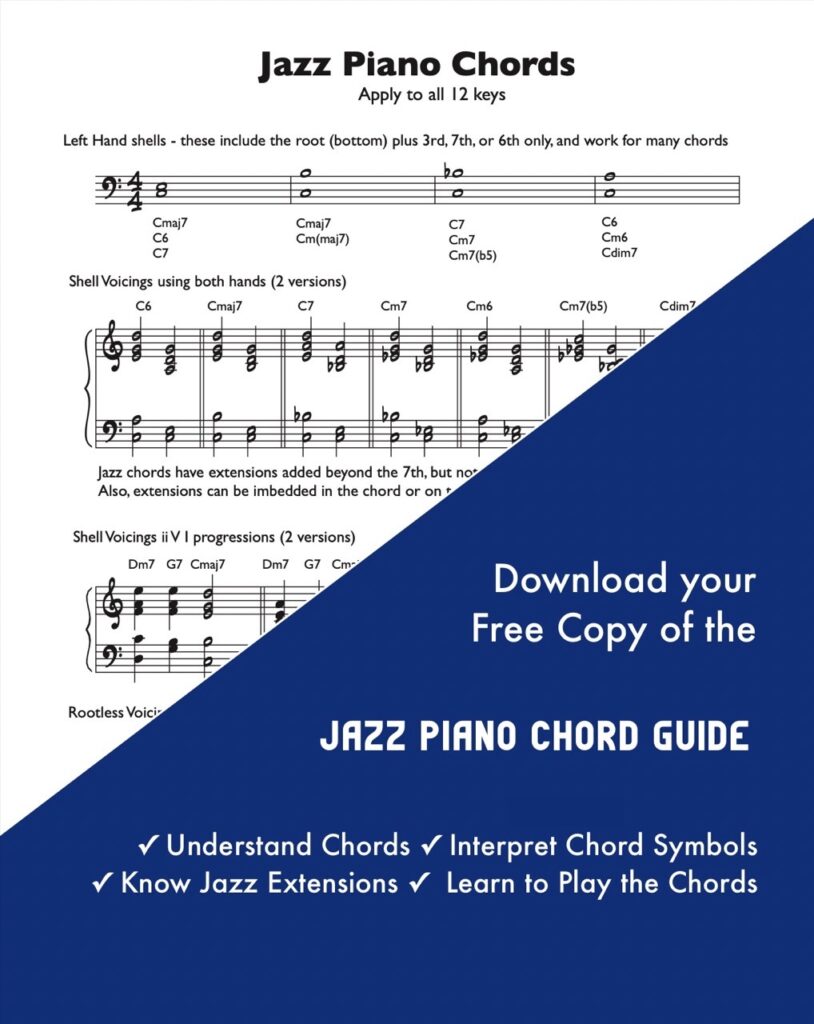
Jazz chord extensions can appear elaborate; ninths, elevenths, and thirteenths are often modified or altered. Knowing the theoretical rules helps you master and teach these alterations systematically rather than memorizing each chord individually. (See the guide below containing common rules for “altering” chord tones/extensions PLUS multiple inversions for every common jazz chord!).
download this guide to extensions PLUS a free jazz piano chord sheet
While there are exceptions to tertian harmony (such as the quartal voicings used by McCoy Tyner and Chick Corea in the 1960s, 70s, and onwards), this core understanding of extensions will give you and your students the tools to master jazz harmony.
Getting Started: Small Steps, Big Confidence
If this seems overwhelming, remember that every jazz master started with simple steps, and so can you. Begin by choosing one type of chord and voicing that resonates personally. Perhaps it’s a major seventh chord or a dominant ninth chord. Learn this chord in a few different keys and practice playing it in time, whether with a drum groove, specific rhythm, or metronome.
Once you feel confident with one chord, add another to your harmonic toolkit. A significant milestone is playing a simple chord progression like the ii-V-I, the most common progression in jazz. This progression appears in countless jazz standards and provides a practical foundation for further learning.
Advanced players eventually develop multiple inversions and voicings for the same chord progression. However, don’t let the vast number of possible chords overwhelm you or your students. Think of it as building vocabulary one word at a time, finding joy in expressing yourself with whatever musical “words” you currently possess.
Effective Practice Methods
It’s necessary to practice chords in different patterns for true fluency. If you always stick to one method, you may have a hard time playing that one chord by itself or in a unique context. It’s similar to the difficultly we have saying the alphabet starting in the middle, or even out of order! If you practice chords always in the same order, you may get stuck in that pattern.
Practicing the same type of chord voicing in fifths provides a logical sequence that reinforces common key and chord relationships.
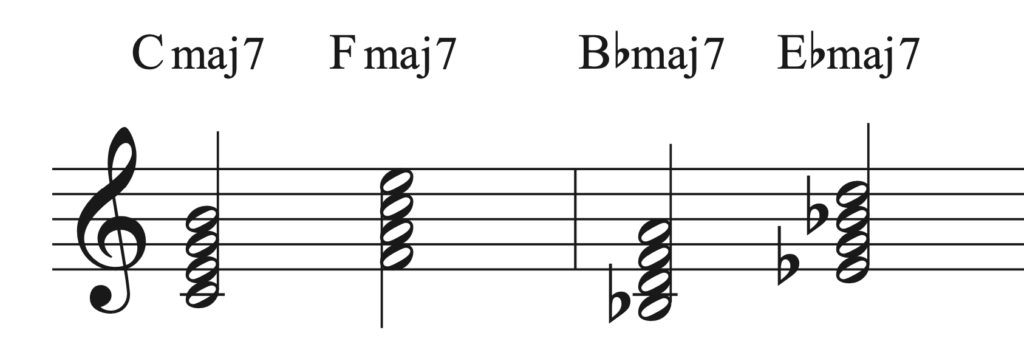
Practicing in whole steps creates different physical patterns on the keyboard, some of which have direct application to standard progressions.
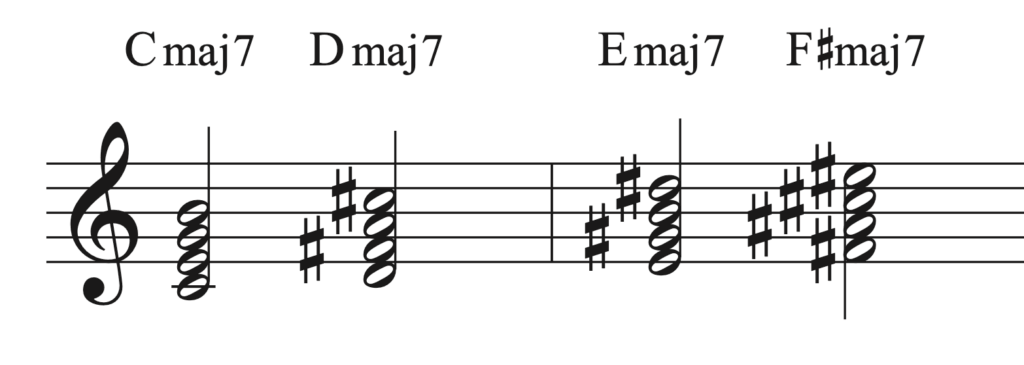
Half-step practice builds chromatic facility and prepares students for the voice leading found in the most skilled pianists. Many jazz chord progressions feature smooth chromatic passing chords (essentially shifting a chord up or down a half-step)
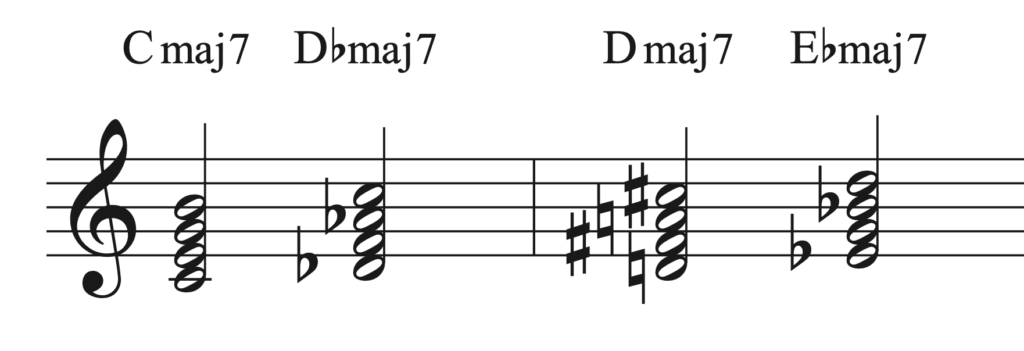
Some educators recommend practicing in minor or major thirds, a very atypical type of chord motion that reinforces quick thinking at the keyboard.
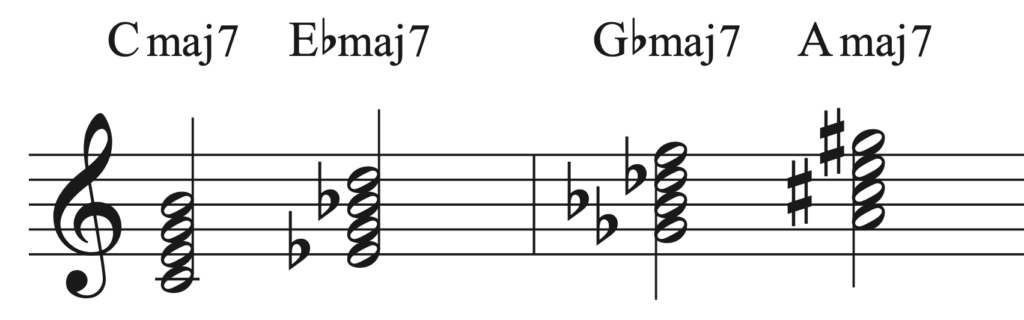
major thirds: C E Ab; Db F A; D F# A#; Eb G B
Be sure to also review common progressions like the ii-V-I or popular “turnarounds.” These progressions provide musical context and prepare students for real-world applications in jazz repertoire.
Always Apply What You Learn
Chords practiced in isolation have limited value; avoid practicing in a vacuum by consistently applying chords to repertoire (i.e. accompanying and/or improvising on jazz standards). This approach keeps learning engaging and demonstrates immediate relevance to yourself or students.
When learning a jazz standard, play through the chord progression (in or out of time) ensuring you use a new chord or voicing. When accompanying yourself or a singer, deliberately play that newly adopted inversion, a new substitution, or a new passing chord. Over time, you or your student won’t need to think about exactly which voicing to play, rather it will naturally come out (just like mastering a language!)
This is the ultimate goal: to develop the ability to effortlessly play the harmony you hear in your mind’s ear.
Music Theory Is Your Teaching Ally
When learning jazz chords, music theory becomes an invaluable friend. Theory helps you understand chord construction, voice leading, and substitution techniques employed by jazz masters. Most importantly, it provides a systematic approach to learning and teaching these concepts.

Understanding what makes a major triad and how it differs from a minor or diminished chord enables you to quickly and accurately learn or teach whatever chord is needed. Since jazz harmony frequently uses inversions, developing speed in constructing and identifying inversions also becomes an essential skill.
Theory also illuminates substitution techniques. The famous tritone substitution common in jazz involves replacing a dominant chord with another dominant chord a tritone away. While it’s possible to use substitutions without theoretical knowledge, understanding the “why” makes teaching and learning much more efficient.
Finally, theory knowledge enables practice in multiple keys as described aboe. This understanding helps both you and your students transpose and modulate confidently.
Keep Learning and Growing
Jazz harmony offers endless opportunities for growth and expression. There are always new ways to voice familiar chords, creating fresh colors and textures. Be sure to listen to the greats for inspiration.
Learning jazz piano chords is an achievable goal for any musician or educator willing to take systematic steps. It’s not instant nor easy to become a master, but there are still ways to start playing jazz harmony now! By building on your existing knowledge of harmony, focusing on one chord at a time, and consistently applying new concepts to real music, you can develop both the skills and confidence needed to play or teach jazz effectively.
Ready to incorporate jazz into your own study?
You can start improvising and creating authentic jazz immediately or your student with How to Teach Jazz & Improvisation. Learn from a book designed specifically for musicians without a jazz background and want to play jazz right away.
Our book has been featured on: All About Jazz, TopMusic Podcast, the Scrappy Piano Teacher Podcast, and more!
Prefer digital over print? We’ve got you covered.
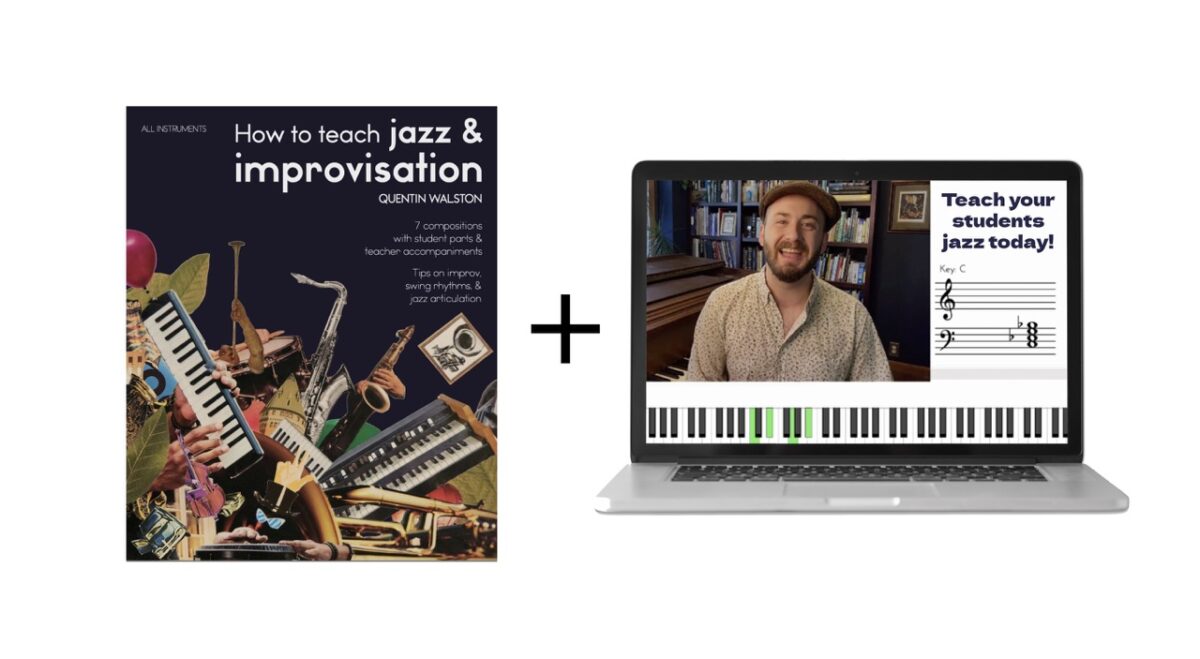
How To Teach Jazz & Improvisation – Course
Course & E-book to teach any jazz & improvisation to any age, instrument, or ability level! Created for private lesson and classroom teachers. No prior jazz experience needed!