
Why exploring blues, jug bands, and old-time music can transform your approach to jazz—whether you’re teaching, learning, or just playing for fun.
I had the amazing opportunity to interview one of my all-time favorite musicians: Grammy-winning musician Dom Flemons (known as “The American Songster”). He shared his journey and shined light on that some of the most direct paths to understanding jazz come through the folk traditions that shaped it.
Dom Flemon’s Unique Musical Path
Dom Flemons‘ path to musical mastery began as a Phoenix teenager absorbing everything he could find. After seeing a documentary on rock and roll history around age 15 or 16, he discovered artists like Louis Jordan, Muddy Waters, Bob Dylan, and Lightning Hopkins. “I got an old guitar at a little guitar shop over in Phoenix, Arizona where I was born and raised and that was my journey in starting,” he recalls.
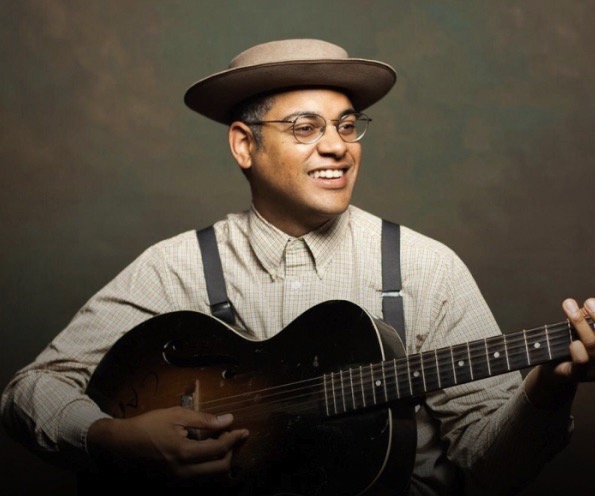
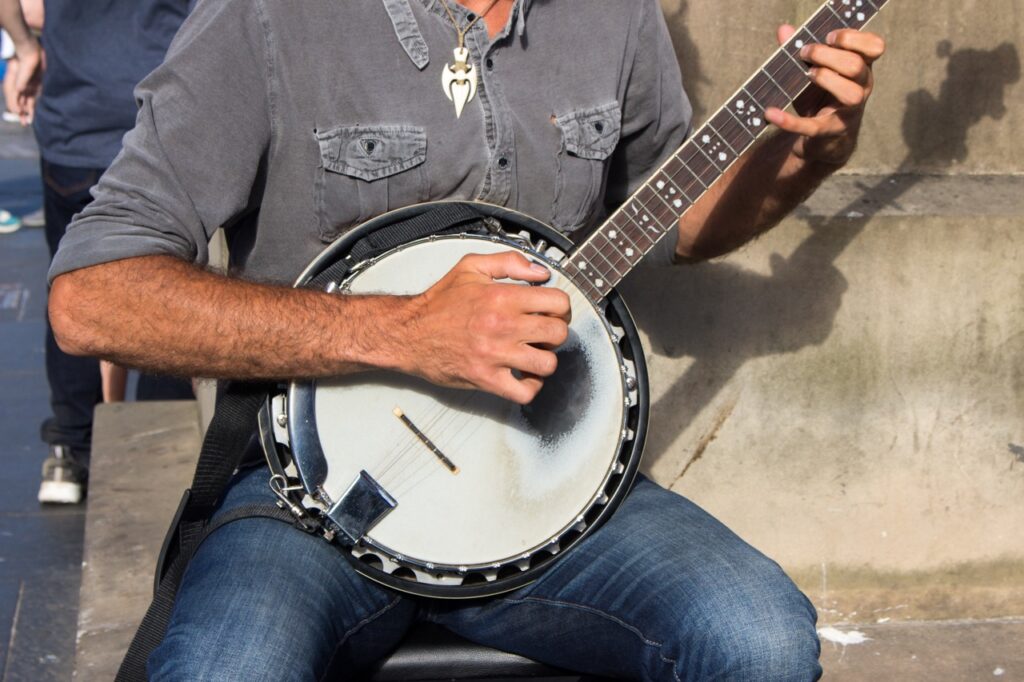
The banjo came later, in a characteristically unconventional way. A friend gave him a five-string banjo without the fifth string, tuned like a guitar (which he eventually tuned it to open G). Without formal instruction and living in Arizona far from traditional banjo communities, he created something unique: “I always viewed the banjo in that manner [as a drum]. So I used drum rudiments to play my banjo style. And that’s why it’s very different than a lot of people, because I’ve always viewed it as a drum more so than a melody instrument.”
He soon found himself absorbing all types of music. “It wasn’t just folk music. It was also early jazz music. You know I got into Jelly Roll Morton’s music, Charles Mingus, early bebop… I love beat poets and so I got a lot of their records like Allen Ginsberg and Lawrence Ferlinghetti and people like that. Country music, blues and yeah, I mean it was always a mixture of everything.” This eclectic approach would later inform his ability to see connections between seemingly separate musical traditions.
“I was finding a lot of old records of different performers that over the previous 30, 40 years had been making records. So I had my time of being able to sit and analyze them and come up with my own ideas of what to do and what not to do.”
The lesson here for any musician: Wide-ranging curiosity and hands-on experimentation can lead to innovative approaches that formal training might never provide. Flemons created his distinctive style precisely because he didn’t know the “correct” way to play banjo.
From Busking to the Big Time
Dom Flemons’ personal journey validates something critical for musicianship: musical understanding develops through doing, not just studying. Starting as a teenager busking on Phoenix streets with “an old guitar [from] a little guitar shop,” Flemons was developing crucial musical skills that no classroom could have taught him. He learned to read audiences, to support other musicians, and to create something engaging from limited resources.
Flemons drew from everywhere: folk music, early jazz, bebop masters like Mingus and Charlie Parker, beat poets, country music, and blues. His wide-ranging curiosity reveals something essential about musical growth: it comes from following your interests rather than following rigid curricula. For music educators, this validates teaching through exploration. For hobbyists and self-taught musicians, it means jam sessions and bedroom experiments are legitimate.
Breaking Down Misconceptions
One of the biggest misconceptions about jazz is that it emerged as a purely improvisational art form. Flemons sets the record straight: “There’s a period of time where jazz is all written music and improvisation was something that was handled only as a selective piece of an orchestration.” Early jazz bands, including prestigious groups like Fletcher Henderson’s orchestra, played primarily from written arrangements.
The revolution came gradually, and Louis Armstrong was at the center of it. As Flemons explains, “This is the reason that Louis Armstrong couldn’t stay in Fletcher Henderson’s band, because he could play off the page, he could read, but he didn’t like to just stay right on the page.” Armstrong had previously played with King Oliver’s band, which “really was a page group that did some improvisation on the breaks.”
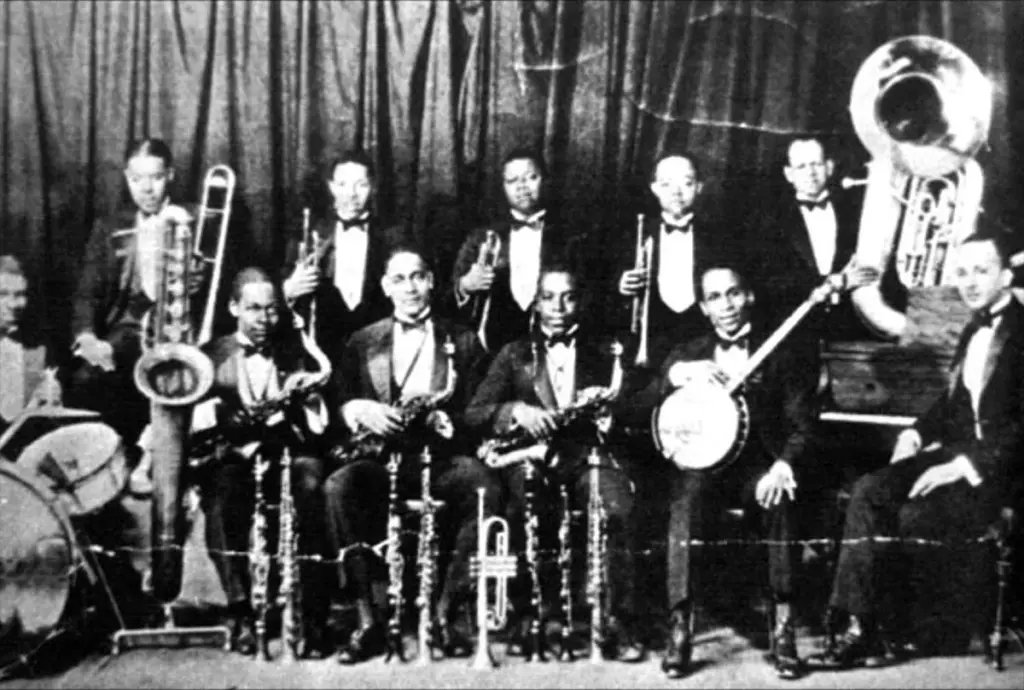
The early approach to improvisation was quite different from what we think of today. “The big innovation was playing hot. And then when the break happens, you could have that. It’s almost… the scratching of the turntable in its own type of way in modern 21st century terms.” These weren’t extended solo sections but brief moments of personal expression within otherwise structured arrangements.
It was only with Armstrong’s Hot Five and Hot Seven sessions that he was given “all of the room to improvise as he pleases. And so once you have that entering into the recorded market of records, that’s when people start to copy his solos so that they can then improvise and then elaborate upon it.” This historical progression should be encouraging for anyone intimidated by jazz improvisation: even the masters started with simple embellishments before developing into full improvisational expression.
Jug Bands and Their Role in Early Folk Music
To understand jug bands, you first need to understand the jug itself. “Literally you’re taking in the most ideal situation a stonemason jug,” Flemons explains. “So like one of those big moonshine whiskey jugs like they make in Kentucky and you’re blowing into it and you’re… almost like a bad embouchure on a horn… you can mimic the sound of a trumpet, a trombone, a tuba, or a drum, in essence.”
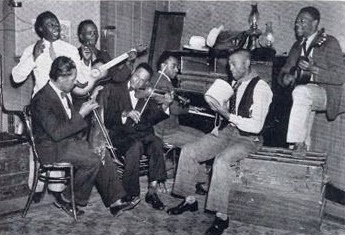
On top of the jug’s low foundation, bands would often employ a guitarist and main singer (a songster) as well as other instruments ranging from harmonica, fiddle, kazoo, washboard, and other percussive and tonal instruments.
The fascinating overlap between jug bands and jazz becomes clear when you consider their shared approach to rhythm section sounds. Jug bands weren’t the predecessors of jazz rhythm sections; rather, they were DIY solutions to the same musical needs that formal jazz groups addressed with traditional instruments. Both were trying to create bass lines, drum sounds, and harmonic accompaniment, just using different tools.
The instrumentation varied by region, revealing different approaches to the same musical goals. Memphis-based groups “tended to be like a blues band like a very stripped down blues band,” while Louisville bands “tended to be more jazz based bands and so they have saxophone and violin… even the Louisville jug bands also used multiple jug players so you even have jug players playing in harmony with each other.” This regional variation shows how communities adapted the concept to their own musical needs and available resources.
Practical Learning from Folk Music
Flemons’ description of how old-time music gets transmitted reveals a learning model that could transform how we approach any musical tradition. “It’s learned until perfect… it’s very much an osmosis style learning process where you may have people that will teach you specifically how to do it, but most of the time you have to just jump into the fray and be in the mix.”
What Flemons describes as “learning until perfect” is playing the piece within the whole ensemble again and again, adjusting your approach and notes as needed, until you blend in perfectly. Old-time music is perfect for this is it is built on repeating the melody throughout the ensemble, so beginners can feel their way through and correct their notes.
This approach validates participation as a learning method, especially with ensembles of mixed musical ability and experience. As Flemons explains, in old-time music, complexity builds through community involvement: “If you have a song that has no chord changes and you’re a fiddler you can fiddle the melody and this young child can just play one chord the whole time and they’re actually playing correctly. And it may not be fancy, but it is correct in of itself.”
The beauty of this system is that it’s “a teaching tool to be able to bring people in.” Rather than requiring prerequisite skills, the music itself provides the framework for learning. “It’s perfected along the way. It’s played until correct is how I define it because it’s not really a straight teacher-student situation in the traditional sense.”
The lesson for any musician (whether teaching or self-learning) is profound: musical growth happens through engagement and community participation, not through isolated study of abstract concepts.
What next?
1. Start with What You Have
- Explore what songs you can play with what you know
- Find enjoyment in the music you can play now
- Form concrete ways to grow your abilities that aren’t overwhelming
2. Master the Art of Supporting Others
- Go to jam sessions
- Go to live concerts
- Explore online communities
3. Embrace Musical Archaeology
- Trace your favorite songs back to their sources
- Explore what influenced your musical heroes
- Follow the musical family tree
Every musician’s journey contributes to keeping these traditions alive and evolving. Your musical curiosity is part of a tradition that stretches back over a century and forward into whatever music you’ll help create next. The key is simply to start exploring, with the confidence that comes from understanding your place in this ongoing musical conversation.
Find more & connect with Dom Flemons:
Learn more at TheAmericanSongster.com or listen to The American Songster Radio on WSM Nashville.
Essential Listening (From Dom’s Recommendations)
- Harry Smith Anthology of American Folk Music – Gateway to American musical roots
- New Lost City Ramblers – Modern interpretations with clear historical connections
- Carolina Chocolate Drops – Innovative traditional arrangements
- Dom’s “Prospect Hill” album – Jazz/folk fusion demonstrations
Ready to build up your jazz knowledge or jazz playing abilities? Our courses and book are designed to make jazz a joy to discover!
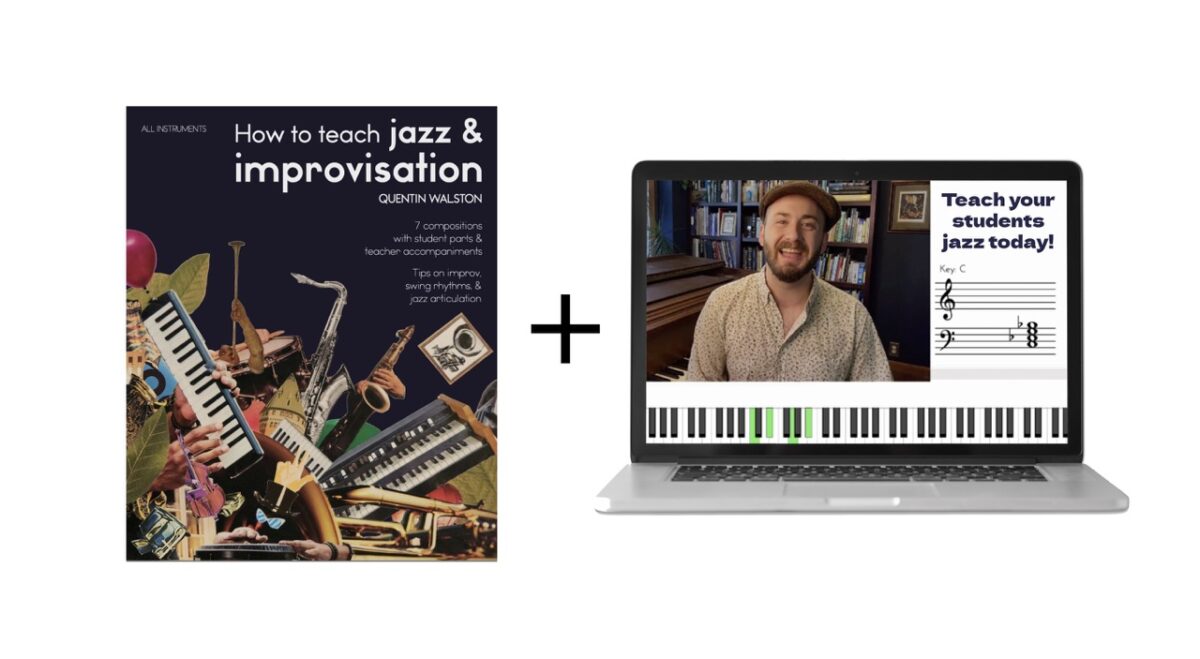
How To Teach Jazz & Improvisation – Course
Course & E-book to teach any jazz & improvisation to any age, instrument, or ability level! Created for private lesson and classroom teachers. No prior jazz experience needed!