When nine-time Grammy winner Christian McBride talks about music, you’re learning from someone who genuinely loves both the music and the people who make it. In our recent conversation, McBride opened up about his latest album, Without Further Ado, Vol. 1, an epic vocal big band recording that showcases his gift for jazz arranging and brining out the best in his many collaborators.
The album, nominated for Best Large Jazz Ensemble Album at the 2026 Grammy Awards, features an all-star lineup: Sting and Andy Summers from The Police, Jeffrey Osborne, Samara Joy, José James, Cécile McLorin Salvant, Dianne Reeves, and Antoinette Henry. More than just a showcase of talent, this recording reveals essential lessons for anyone enjoying, teaching, or learning jazz.
From Annual Galas to Grammy Nominations
The story behind Without Further Ado, Vol. 1 was years in the making! Since 2012, McBride has served as Jazz Advisor at NJPAC in Newark, New Jersey where his big band performs at the annual galas. For over a decade, he’s written arrangements for these events, where beautiful charts are performed once with featured singers.
“After a decade or so, I realized I just had all of these big band charts laying around,” McBride explains. “So I thought it really would be a shame to waste these.” Most arrangements had already been performed at NJPAC, however, McBride wrote two tracks specifically for this recording: “Murder by Numbers” with Sting and Andy Summers, and “Old Folks” with Samara Joy. The Sting collaboration came about organically when McBride casually mentioned the Police’s “Murder by Numbers,” Sting immediately suggested bringing Andy Summers on board.
Personally, I love the resourcefullness of creating an amazing album out of mostly pre-existing material (something I never would have guessed as the album sounds so unified). It also serves a great reminder for artists and teachers to not give up on something you’ve made: you may just have to wait until the timing is right!
Writing for the Voice: It’s About Trust, Not Tricks
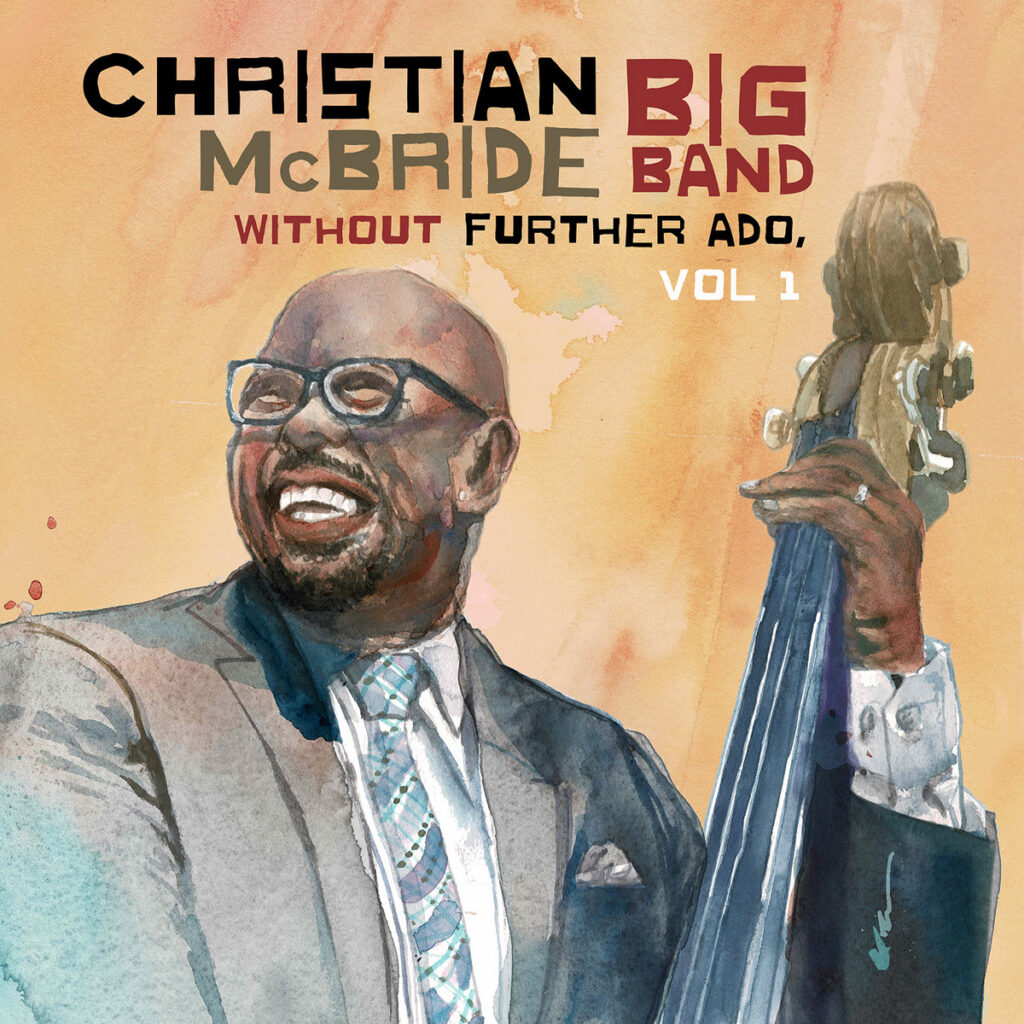
One of my favorite aspects of Without Further Ado, Vol. 1 is how perfectly each arrangement suits its vocalist. From Antoinette Henry’s adventurous interpretation on “Come Rain or Come Shine” to José James’ hard swingin “Moanin'”, McBride’s writing brings out the best in each artist.
How does he do it? Conversation and trust.
“It’s a simple conversation with the artist and say, ‘Hey, what do you want to sing?'” McBride shares. “Most of the time they will let me kind of run with it because they know I’m not going to trick them into doing something… I like to challenge the vocalist, of course, but I only want to challenge them so they feel inspired, not so they feel like they’re being stumped or being put on the spot.”
This kind of thoughtful arranging demonstrates McBride’s understanding that great jazz composing isn’t just about the notes on the page, nor displaying your own musical sophistication at the expense of others. Rather, it’s about creating the right emotional and musical environment. I think this lesson is important for all musicians, even all leaders regardless of area/profession. Trust and conversation lead to much stronger outcomes than one creative person trying to force something perhaps to difficult or abstract on others.
Christian McBride on When to Push the Boundaries
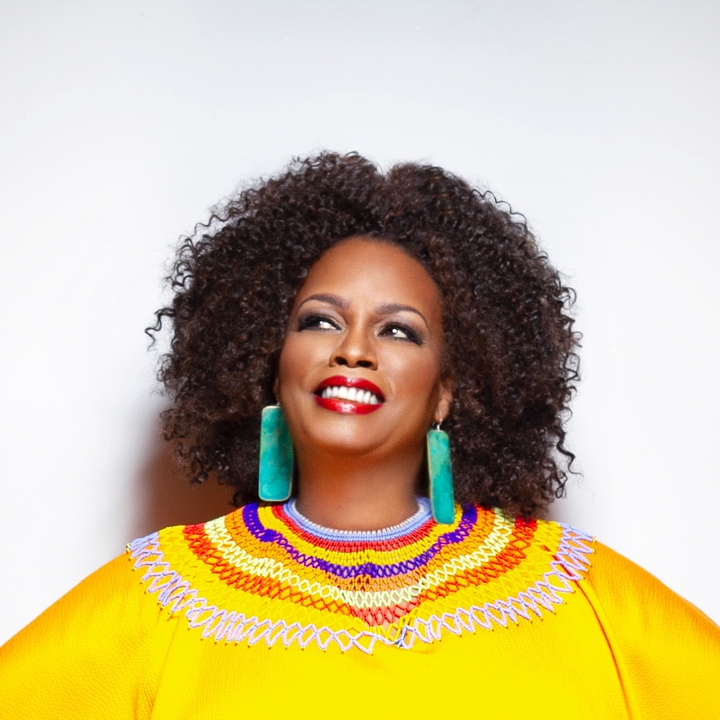
While McBride is careful not to overwhelm vocalists, he knows some thrive on challenge. Dianne Reeves is one of them.
“She’s one of the few vocalists that I know who is always up for a challenge,” McBride says. He joked: “There’s no such thing as stumping her. If you say, ‘Hey Dianne, I want to recreate Misty as an acoustic rock song,’ she’ll be like, ‘All right, let’s do it.’ And I put it in 5/8. She’ll be like, ‘Okay.'”
For “Will You Still Love Me Tomorrow,” McBride took an arrangement Russell Ferrante wrote for small group and expanded it for big band. The result transforms the 1960s teen pop song into something deeper—a romantic heartbreak song at a slower, more contemplative pace. McBride’s orchestration with flutes and clarinets creates almost orchestral textures that evoke the sophisticated colors of large jazz ensemble composer Maria Schneider.
The Dance Between Intention and Immersion
One of the most fascinating aspects of McBride’s creative process (and perhaps his artistry as a whole) is how he balances conscious, intentional choices with the intuitive language that emerges from deep immersion in jazz. This balance is something every developing jazz musician eventually encounters.
Sometimes McBride’s references are deliberate. During the trumpet solo on “Moanin'” with José James, he wrote in a quote from Benny Golson’s “Blues March,” a conscious salute to one of his early mentors. Golson hired McBride and took him to Europe shortly after his 19th birthday, making this musical nod both literal and deeply personal. “My dream was for Benny Golson to hear the arrangement,” McBride explains, “so he could hear me saluting him, you know, literally and figuratively.”
But other references emerge naturally. McBride was surprised when someone pointed out that the background saxophones on “All Through the Night” with Cécile McLorin Salvant sound like Miles Davis’s “Four.” “I didn’t [notice that]… yeah, I guess that is kind of fourish, you know?” he admits. “So yeah, that was totally unintentional. You know, this language just comes out.”
For musicians and educators: This is a crucial lesson for those learning jazz. You don’t need to plan out every moment, or even consciously think about every harmonic choice or rhythmic figure while you’re playing or composing. The goal is to absorb the language so thoroughly that it becomes part of your natural musical vocabulary. When your or your students transcribe, listen deeply, practice and become immersed in the music, the language starts to “come out” on its own.
Finding Your Own Voice: Lessons from Ron Carter and Ray Brown
When asked about his own development as a bassist, McBride shares a story that resonates with anyone who’s ever tried to copy their heroes.
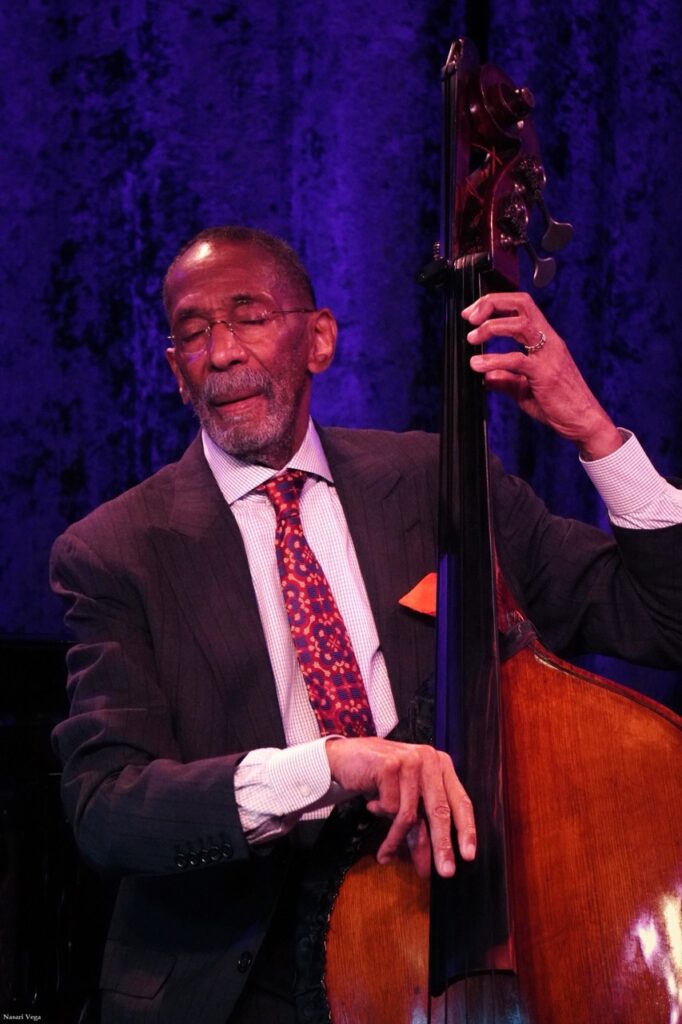
Ron Carter was his first jazz bass hero. McBride transcribed everything, watched videos, and tried to replicate Carter’s technique: how he stood, his right-hand technique, everything. “No matter what I did to the ‘T’, I could not sound like Ron Carter,” McBride recalls. “And this is a lesson to all young musicians… You hear somebody, you connect with them and you try to copy that… It never works.”
The impossibility of exactly replicating someone’s sound isn’t failure, it proves we can be inspired by our favorite musicians and learn from them, but ultimately we create our own musical voice. As McBride notes, “It’s like DNA. You can’t have that DNA no matter how hard you try.”
What McBride could study were Carter’s concepts: building linear bass lines, achieving clear notes across the instrument, extended harmony and rhythm. These fundamental approaches transcend personal style. (learn about these concepts in our Jazz Unlocked II theory course).
Then came Ray Brown, whose performance changed everything. “Something about his playing brought in the fun element. It brought in the funk element.” This realization—that swing rhythms could be played with funk attitude—profoundly shaped McBride’s musical identity. You can hear that joyful, funky attitude throughout his playing.
This is a hugely important distinction between imitation versus analytical listening that gets to the deeper concepts of someone’s style.
The Value of Musical Relationships
Beyond his big band work, McBride hosts SiriusXM’s “The Lowdown: Conversations with Christian,” capturing the stories and wisdom of fellow musicians.
“I’ve been really fortunate to be friends with so many great musicians and they’ve all got great stories,” McBride reflects. He’s grateful to have recorded conversations with Roy Hargrove, Russell Malone, Lou Donaldson, and Chick Corea before they passed away.
In addition to older generations of jazz masters, Christian McBride helps to recognize rising start. He served as a judge when Samara Joy won the Sarah Vaughan International Jazz Vocal Competition. He later went on to feature he on Without Further Ado, Vol 1! For “Old Folks,” written specifically for this album, McBride crafted an arrangement that showcases Joy’s remarkable talent while honoring the jazz standard tradition.
Why This Matters for Jazz Education
Christian McBride’s approach offers a masterclass in jazz education. His emphasis on building trust, challenging without overwhelming, and balancing conscious intention with deep immersion provides a roadmap for anyone teaching jazz.
McBride demonstrates that jazz is fundamentally about people: their stories, connections, and the trust they build when creating music together. When he writes for vocalists, he’s not just arranging notes, he’s creating a space where artists can create something truly special.
That’s exactly what great jazz education looks like too.
Without Further Ado, Vol. 1 is available now on all major streaming platforms. Watch the full interview above to hear more from Christian McBride about the album, his creative process, and his thoughts on finding your own voice in jazz.
Christian McBride’s Christian McBride Big Band has been nominated for a Grammy Award for Best Large Jazz Ensemble Album at the 2026 Grammy Awards. The album features Sting, Andy Summers, Jeffrey Osborne, Samara Joy, José James, Cécile McLorin Salvant, Dianne Reeves, and Antoinette Henry.