
Most bass players think of their instrument as the foundation, the support system, the thing that holds everything together while the soloists take the spotlight. Ron Carter sees his role far beyond that.
In a recent conversation, the legendary bassist described his approach to playing bass during his time with the Miles Davis Quintet in the 1960s and how that philosophy continues to shape his music today. From his perspective, the bass isn’t just an accompaniment instrument. He sees it as a vehicle for proposing harmonic directions, creating tension, and setting up musical events that keep both musicians and audiences engaged.
Leading from Below: Carter’s Conception of the Bass Role
When you listen to recordings of the Miles Davis Quintet from the mid-1960s, you’re hearing some of the finest collective improvisation in jazz history. As the group’s bassist, Ron Carter was going far beyond walking bass lines through chord changes or providing a steady pulse, he was active in the harmonic direction and stylistic texture of each moment.
“I am the option,” Carter said when asked if he was setting up choices for his bandmates. “I want them to follow my option.”
It’s a bold conception of what the bass can do in a jazz ensemble. Carter felt that in a group of musicians as harmonically sophisticated and rhythmically adventurous as Miles Davis, Herbie Hancock, Wayne Shorter, and Tony Williams, he could propose the next move, preparing the ground for what was about to happen.
The key, according to Carter, was in the setup. He describes his process as building toward an “event”. An event could be a radical chord substitution, a rhythmic shift, a change in tempo, etc. This practice of telegraphing and acting on spontaneous ideas is part of what makes this band so incredible and fresh (even sixty years later).
“My job was to set it up so they knew it’s coming,” he explained. “Once I understood how to approach this new event for them, my job was then to find a lead into that that they couldn’t miss, that they would jump right on it because they heard it over here somewhere.”
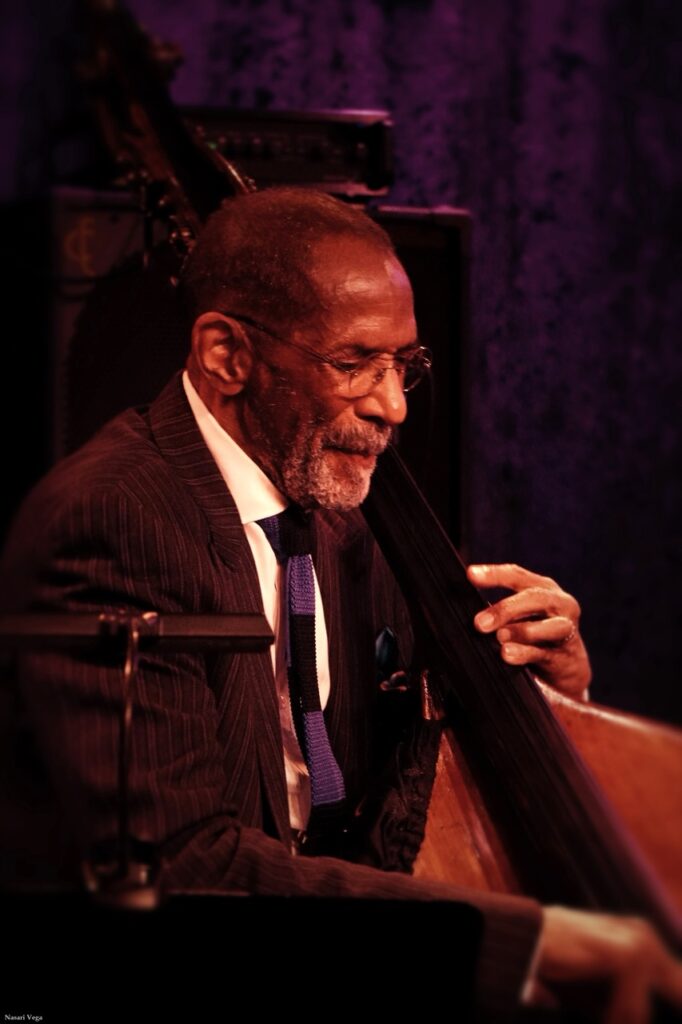
The Balance of Head and Ear
Carter’s approach requires both deep harmonic knowledge and exceptional ears. When asked about the balance between analytical thinking and intuitive playing, his answer was revealing: “It’s both of those things. I don’t think you could have one without the other.”
He’s encountered musicians who can hear chord changes but don’t know what to do with them, and others who have the theoretical knowledge but can’t apply it in the moment. Carter positioned himself as having the optimal mixture of skills. He hears an idea and remembers that it worked on a particular tune. Then he starts asking questions: Will it work on another tune? Will it work in another key? Will it work with different changes? With a different band? A different tempo?
Creating Tension Through Restraint
One of the most fascinating aspects of Carter’s playing philosophy is his use of tension (usually created through contrasting musical elements happening simultaneously). He describes establishing rhythmic figures that create deliberate friction with what the drummer is playing, particularly in his work with Tony Williams.
“When I hear my rhythm, I’m hoping two things,” Carter explained. “That the drummer, in this case Tony Williams, will not join me. Because I want the tension of what he’s playing against this new engine, this new rhythm I’m throwing in the pot right then, right here, right now.”
“I want them to actually hear this kind of back and forth. That’s what excites me, man.”
This approach, he emphasizes, requires restraint. He described pacing a song, hearing ideas but not immediately echoing them back, and letting the deliberate contrasts build. “Without restraint, not anyone’s going to hire you.”
Chartography: A Window Into Evolution

Carter’s book “Chartography” offers musicians and jazz fans a detailed look at how his approach to reharmonization and rhythmic variation occurred in practice. The book features transcriptions of his bass playing (with harmonic analysis derived from bass notes and Herbie Hancock’s piano voicings) from Carter’s time with the Miles Davis Quintet, all centered around one tune: “Autumn Leaves.”
By focusing on a single standard across multiple performances, “Chartography” reveals how Carter and the band’s musical thinking developed, how he experimented with different harmonic pathways through the same chord progression, and how his rhythmic vocabulary expanded. It is incredible to listen to the recordings and follow along with the sheet music; especially given the fact that the music was all improvised over the faintest of predetermined song structures.
For anyone interested in understanding how great jazz musicians think and/or the work of the Miles Davis Quintet in the 1960s, “Chartography” is an essential resource. You can find it here.
Sweet Sweet Spirit
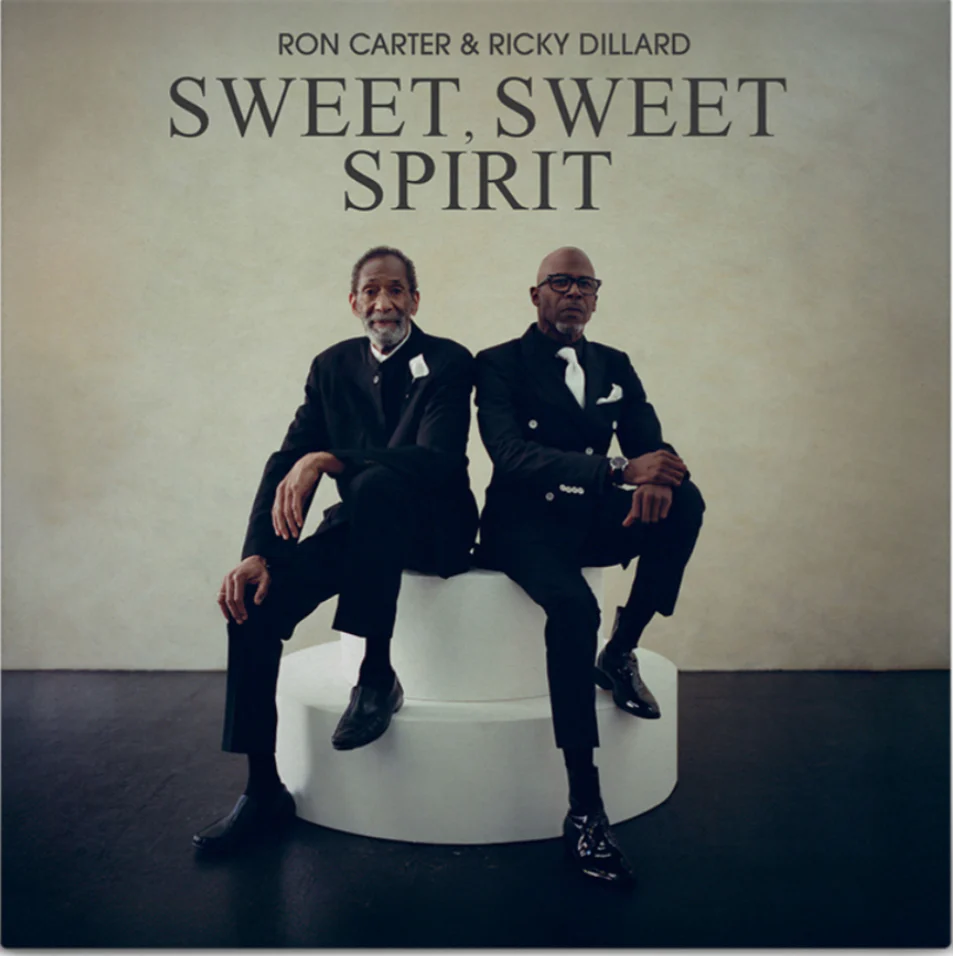
We were able to discuss Carter’s newest album, a project that takes him in a different direction entirely. “Sweet Sweet Spirit,” releasing February 6, is a gospel jazz album featuring choir, organ, and Carter’s arrangements of classic hymns.
The project is a tribute to Carter’s mother, Willie O. Carter. The album came together through Blue Note Records president Don Was, who connected Carter with choir master Dr. Ricky Dillard.
Ron Carter wanted his bass to adopt a specific role in the album: to emulate the bass voice of a gospel quartet. “What I was trying to do is make my bass be the bass voice of a multi-voiced quartet,” he explained, referencing the deep, foundational bass singers in groups like The Swan Silvertones.
The result is an album that bridges Carter’s jazz virtuosity with the Faith that was so central to his mother’s life. You can hear it everywhere music streams starting February 6, 2026.
It is the author’s hope that listeners to the album can reflect on the deep lyrics of hymns included such as: “Softly and Tenderly” and “Just A Closer Walk With Thee”.
Everyone Has a Voice
I am so grateful to have spoken with this jazz legend. Whether you adopt Carter’s specific approach or develop your own (or just enjoy listening to the music), his philosophy points to the conversational quality of jazz, and one that creates the perfect blend of spontaneity and communication.
Every musician in the ensemble has the opportunity to shape where that conversation goes. His view is that leadership can come from any chair in the band. Now this isn’t an invitation to proclaim yourself king or queen over the ensemble and direct every moment! Rather, it’s a way of playing, that when taken humbly, can produce some of the most incredible and memorable music audiences can experience.
Want more insights from jazz legends and practical approaches to understanding jazz? Sign up for the This Is Jazz newsletter for articles, interviews, and jazz resources delivered to your inbox.
Explore Ron Carter’s evolution: Check out “Chartography” for transcriptions and analysis of his groundbreaking bass work with the Miles Davis Quintet.
Listen to “Sweet, Sweet Spirit”: Ron Carter’s new gospel jazz album releases February 6 on all streaming platforms.